
Exile does not simply move you through space. It rewires your relationship to time.
There is the time of the place you left, which continues without you, and the time of the place you now inhabit, which you have not yet fully learned to read. Between these two clocks, a gap opens, and inside that gap, you begin to live.
This is not a metaphor. It is closer to neurological fact. Migrants often describe a lingering sense of being out of sync with their new environment, still responding to rhythms that no longer apply. The way the day begins later in one country. The way meals are eaten at different hours. The way silence or noise carries different meanings. These are not adjustments; they are reorientations. The body knows the old time even when the mind has accepted the new.
In writing about displacement, this experience is often described as a state of being caught between what was and what is. Exile is not only a moment of leaving; it is an ongoing experience where the past continues to shape the present, sometimes changing how both are understood. Memory in exile does not move in a straight line. It circles back, changes, and reshapes itself with each return.
Khaled Hosseini’s The Kite Runner and And the Mountains Echoed explore this through what scholars describe as “memory mapping”—a cartographic mode of recollection shaped by sensory recall. Memory here does not simply retrieve; it reconfigures. Memory is not simply a record of the past; it changes depending on where a person is standing in the present. For example, a character who returns to a childhood home years later may not see the place exactly as it was. A street that once felt endless may now feel smaller. A familiar smell, sound, or object may bring back a memory, but that memory is shaped by everything that happened in the years between leaving and returning. The past does not stay frozen; each return creates a new version of it.
Memory as reconstruction, not retrieval
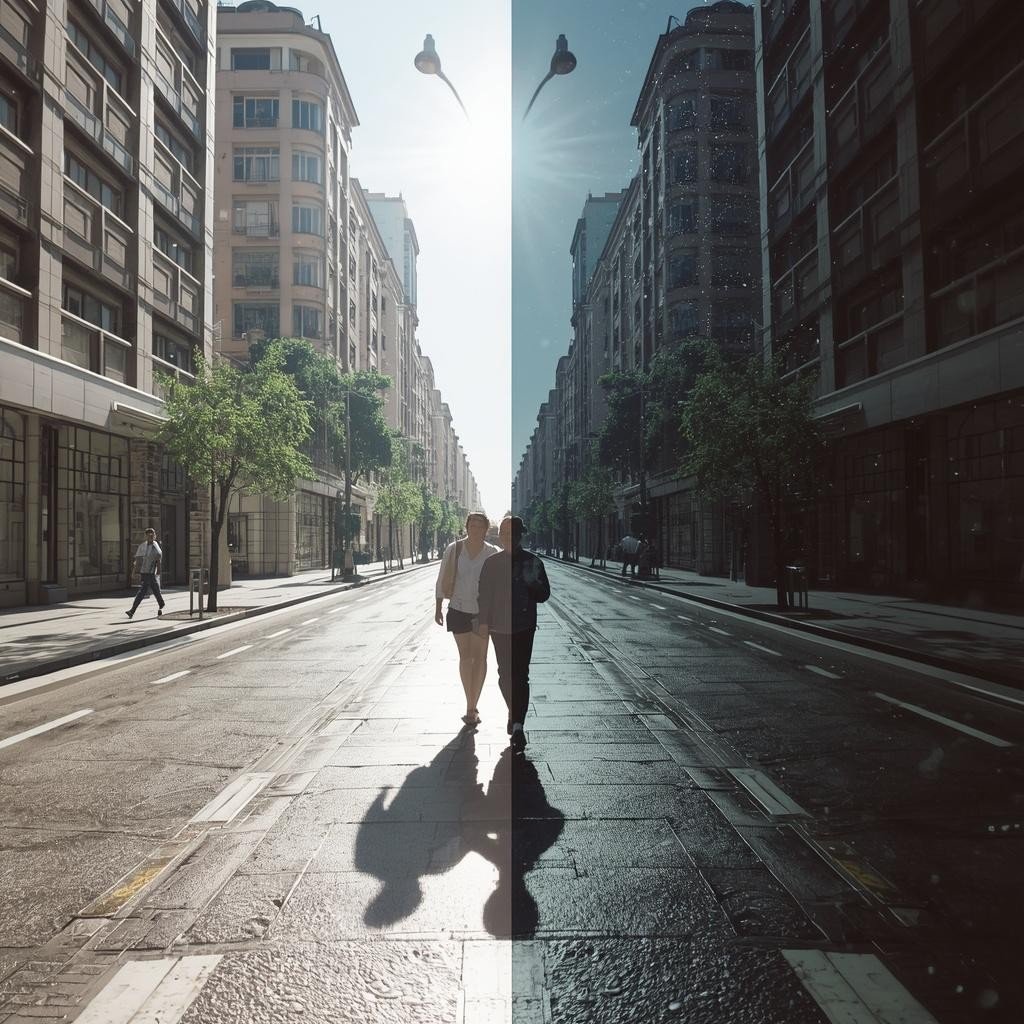
Double Time
In fiction, this feeling of being between places can become a powerful storytelling tool.
A character who feels caught between places often carries two internal clocks. They remember the heat of a Lagos afternoon while walking through a London winter, they calculate calls across time zones. They measure distance not in miles but in degrees of separation.
This dual awareness produces a particular perceptual clarity: the ability to notice what others overlook. The migrant sees the new environment without the dulling effect of familiarity. Small rituals, unspoken rules, and habitual gestures become visible again.
That ability to see ordinary things differently becomes powerful material for fiction.
In novels such as Jamaica Kincaid’s Lucy, the relationship between the home island and the city of exile is structured through a tension between cyclical and linear time. The island appears as a place where time thickens and returns on itself; the city, by contrast, is forward-moving and indifferent. Lucy moves between these temporal systems without fully inhabiting either. Her exile is not only geographic but temporal, a sustained suspension between modes of time.
For such characters, writing becomes a way of making sense of places and memories that no longer exist in the same way. The page becomes a space where old homes can be recreated, lost relationships revisited, and past and present coexist. The two clocks do not have to be resolved; they can simply exist side by side.
Double awareness unavailable to those who stayed
Writing the Two Clocks
When writing exile, resist the urge to explain a character’s displacement directly. Instead, allow readers to experience it through the character’s relationship with time, memory, and everyday life.
The difference between these two clocks often appears in small, everyday behaviours.
A character might arrive early to appointments because they are still adjusting to a different pace of life, where waiting means something different. They might work late because the quiet of the new city feels unfamiliar. They may organise their days around calls across time zones, measuring time not only in years but in visits, conversations, and moments slowly lost between people who once shared the same world.
These are not just habits or quirks; they reveal what it feels like to live between different experiences of time.
Isabel J. Kim’s Sublimation explores this duality through the idea of parallel lives: the life a person is living now and the life they left behind existing at the same time. The character does not have to choose between the two; they learn to exist within the space between them.
In Teju Cole’s Open City, walking through New York becomes a way of uncovering layers of memory and history. The city is not just a physical place; every street carries traces of the people, events, and stories that came before. As the character moves through the city, he is also moving through different layers of the past.
Walking, then, becomes more than moving through a place. It becomes a way of encountering memory. Each street, sound, or familiar detail can bring the past into the present. The city does not erase what came before; it can bring those memories back to life.
Memory mapping and the distortion of the past
What the Two Clocks Teach Us
Exile creates a space where the past and present exist together. It is not simply a conflict to overcome; it is part of how many displaced people experience the world.
The exile does not resolve the tension between past and present; they learn to live with both. They move between different experiences of time without ever fully bringing them into alignment. This is not a failure; it is a way of continuing while carrying multiple worlds at once.
For writers, this offers an important insight: characters in exile do not need to choose between who they were and who they are becoming. A truthful portrayal of displacement allows both versions of the character to exist together. The clocks do not need to match. They simply need to be heard.
Exile, in this sense, is not only a loss; it can also become a different way of seeing. It can sharpen attention, deepen memory, and make a person more aware of details that others may overlook. The exile notices what familiarity conceals. They hold multiple temporal worlds within a single frame of attention.
It is not only a loss.
It can also become a way of seeing the world differently.
Belonging is not restored — it is rewritten
Reference Text: Teju Cole, Open City; Khaled Hosseini, The Kite Runner and And the Mountains Echoed; Jamaica Kincaid, Lucy; Isabel J. Kim, Sublimation.